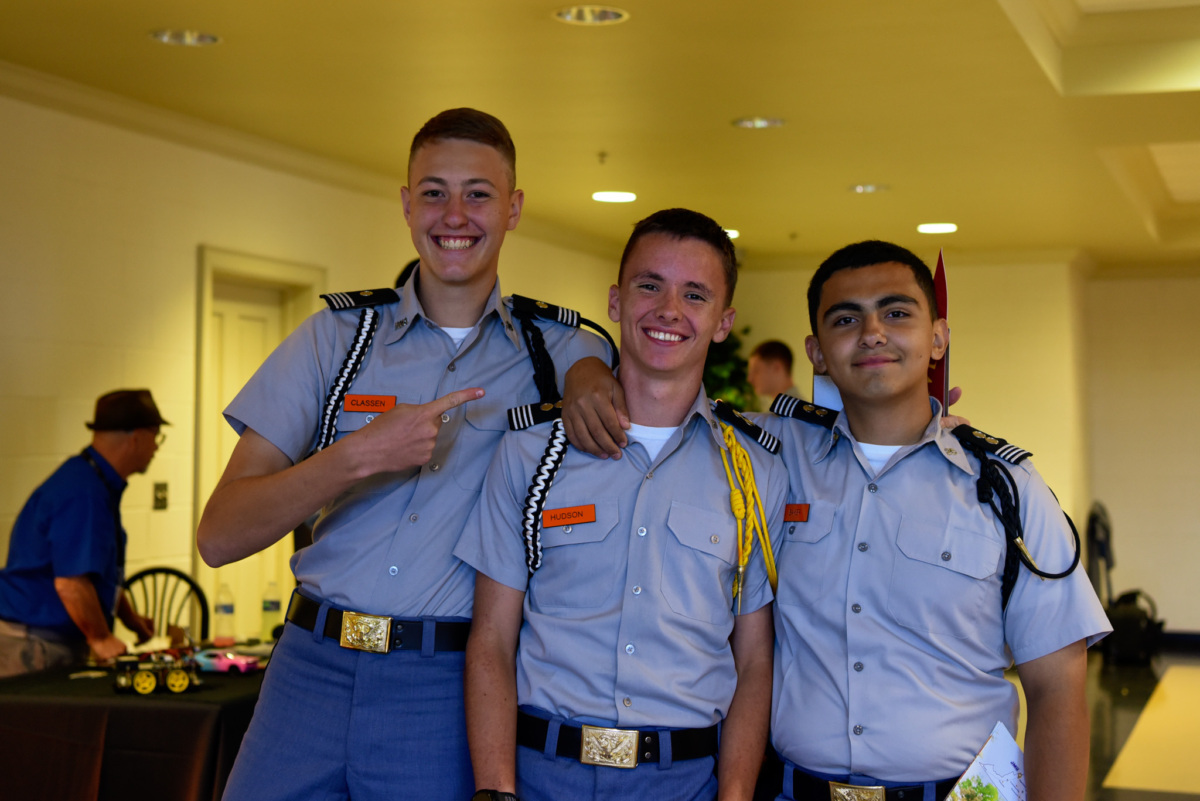
The first week at boarding school shapes your son’s entire experience. At Hargrave, we’ve refined this transition over 116 years. Here’s what your son can expect during his first week, so your family can prepare with confidence.
Before Arrival: Matriculation Preparation
Before your son arrives, he’ll receive a detailed matriculation packet with move-in dates and times, packing lists and what to bring, uniform fitting information, health forms and immunization requirements, technology requirements, and contact information for questions. Read this packet carefully together. It answers most questions and reduces first-day anxiety.
The Parent Association prepares welcome bags placed in each new cadet’s room—a thoughtful touch showing he’s expected and valued from day one.
Day One: Arrival and Check-In
Matriculation Day is carefully orchestrated to balance efficiency with warmth. Families arrive during assigned time windows to avoid overcrowding. You’ll check in at the main building, receive room assignments and keys, meet your son’s TAC officer (faculty member supervising his company), and get a building tour. Volunteers help carry belongings to rooms.
Your son will meet his roommate—carefully paired based on grade, interests, and temperament. The two-man room becomes his home base. Resident faculty live in the building, providing 24/7 support and supervision.
Uniform Fitting and Issue
One of the first steps is uniform fitting. Hargrave provides all uniforms—daily wear, dress uniforms, athletic gear, and seasonal variations. Professional staff measure each cadet and issue properly fitted uniforms. Your son will learn about different uniform requirements (Uniform of the Day varies), proper wear and maintenance, when to wear each uniform type, and insignia and rank display.
The uniform is equalizing—everyone looks the same regardless of socioeconomic background. Success comes from performance and character, not fashion.
Orientation and Training
The first several days include intensive orientation covering military basics like standing at attention, saluting, marching in formation, room inspections, and uniform standards. Daily schedule and expectations are explained. Academic placement testing occurs. The Honor Code is introduced and discussed. Chapel expectations and faith pillar are explained. Athletic options and tryouts are scheduled.
New cadets learn alongside returning cadets who mentor and model behaviors. The peer support accelerates learning and builds connections.
Meeting Faculty and Staff
Your son will meet his academic teachers during orientation, his coaches during athletic assessments, the chaplain during chapel introduction, his TAC officer who supervises daily life, medical staff at the infirmary, and administrators including the President, Academic Dean, and Athletic Director.
Everyone knows new cadets are adjusting. Faculty and staff provide extra patience, explanation, and encouragement during the first week. No one expects perfection—they expect effort and openness.
First Classes
Academic classes typically begin by the third or fourth day. The first week of classes focuses on syllabus review and expectations, diagnostic assessments to ensure proper placement, introduction to the How to Study program, explanation of study halls and Individual Instruction Time, and beginning coursework at an introductory pace.
Classes average 12 students, so your son is immediately known by name. Teachers identify struggling students quickly and provide extra support.
Athletic Tryouts and Placement
Athletics are part of the Hargrave experience, and with a wide range of teams, every cadet can find his sport. The first week includes athletic assessments, tryouts for various sports, placement in varsity, JV, or recreational programs, issuance of athletic equipment and gear, meeting coaches and team members, and understanding practice and game schedules.
Whether your son is an experienced athlete or new to organized sports, Hargrave has a place for him. The emphasis is on participation, character development, and teamwork—not just winning.
Learning the Routine
The daily schedule can feel overwhelming at first. By the end of the first week, your son will understand wake-up and reveille procedures, morning formation and inspection, class schedule and transitions, lunch and dinner routines, study hall expectations and location, evening activities and free time, and lights out and taps.
The structure eliminates guesswork. Once learned, the routine becomes automatic, freeing mental energy for academics, relationships, and growth.
Building Relationships
The first week is socially intense. Your son will interact constantly with his roommate, meet company members in his barracks, connect with classmates in academic settings, train with athletic teammates, participate in clubs or activities, and engage with upperclassmen leaders.
Some boys are naturally outgoing; others are reserved. Both temperaments find their place. The shared experience of being new creates instant bonds. Many lifelong friendships begin during the first week.
Homesickness and Adjustment
Homesickness is normal and expected. Most new cadets experience it to some degree. Hargrave’s staff recognizes the signs and provides support through regular check-ins with TAC officers, access to the chaplain for counseling, peer support from roommates and classmates, structured activities keeping minds occupied, and appropriate contact with families.
The intensity of the schedule actually helps—there’s little time to dwell on missing home. By the end of the first week, most cadets report feeling more comfortable and confident.
Family Communication
During the first week, communication guidelines will be established. You’ll learn about phone call policies and times, email and messaging expectations, video call options, mail and package procedures, and the family portal for updates and information.
Balance is important. Your son needs to bond with his new community while maintaining family connections. Hargrave guides families toward healthy communication patterns.
The First Weekend
The first weekend provides crucial downtime. Some new cadets have open weekend privileges and go home. Others remain on campus for bonding activities, informal socializing, athletic events, and adjustment time. The student activities department plans on-campus activities ensuring no one feels isolated.
Many families find that keeping their son on campus for the first weekend accelerates adjustment. He bonds with peers and establishes Hargrave as home rather than a temporary stop between home visits.
Common First Week Challenges
Expect these challenges—they’re normal. Physical fatigue from the intense schedule and new routine. Information overload from learning so much so quickly. Social anxiety about making friends and fitting in. Academic concerns about placement and expectations. Homesickness and missing family. Learning military protocols and expectations.
Faculty and staff anticipate these challenges and provide support. Your son isn’t alone—every new cadet faces the same adjustment.
What Parents Can Do
Support your son’s transition by staying positive and encouraging, respecting communication guidelines, trusting Hargrave’s process and expertise, not rescuing him from normal challenges, celebrating small victories and progress, and maintaining perspective—adjustment takes time.
The first week is intense by design. It creates bonds, establishes routines, and builds confidence quickly. By the end of week one, most new cadets report feeling capable, connected, and excited about the year ahead.
Looking Ahead
After the first week, the pace continues but feels less overwhelming. Your son will settle into academic routines, develop athletic skills and team bonds, deepen friendships, understand expectations and systems, and begin to thrive rather than just survive.
The transformation from nervous new cadet to confident young man happens gradually. The first week is just the beginning.
Ready to learn more about how Hargrave supports new cadets? Schedule a visit to talk with current students about their first week experiences. Ask TAC officers about new cadet support. Discover how we make the transition as smooth as possible.
Contact us at 866-994-4582 or admissions@hargrave.edu in Chatham, Virginia.